Showing posts sorted by relevance for query 21 bar. Sort by date Show all posts

Wednesday, October 31, 2007

Iowa City Council Candidates Consider Impact of 21 Bar Referendum

Iowa City Council Candidates Consider Impact of 21 Bar Referendum

Young people are statistically the least likely voters, especially in local elections in high-turnover college towns.  But last week, Iowa City saw a burst of presidential-level voting activity on the University of Iowa campus.  This burst of civic activism was prompted by an issue with direct impact on most students: their nightlife.

Iowa City voters are considering an ordinance that would prevent anyone under age 21 from entering bars after 10 p.m.  The question was placed on the ballot by a citizen petition allowed under Iowa City's home rule charter.  Proponents argue the ordinance would reduce underage and binge drinking, while supporters contend it would merely push partying to the less controlled house-party environment.  (Lost in the shuffle: the legislative question of whether or not a 21-year-old drinking age law is either just or workable in a college town.)

The referendum has stirred the sleeping giant of student apathy. Members of the whimsically named Student Health Initiative Taskforce (the Iowa City Press Citizen, which has endorsed a yes vote, is reluctant to print the name because of the acronym) petitioned for five satellite voting sites on campus before last Friday's voter registration deadline, and nearly 2,900 people voted on campus.  The satellite vote effort followed a vote-by-mail drive the previous week that netted about 1,800 requests.  In this world turned upside down electorate, the most likely voters to have requested absentee ballots were independents aged 18 to 24 in Iowa City Precinct 5, a downtown area made up almost entirely of dorms and fraternities.

Of course, a requested ballot isn't the same thing as a counted vote.  In 2001, bar owner Mike Porter led a similar but smaller vote-by-mail drive on behalf of city council candidate Leah Cohen, owner of bar-restaurant Bo James in downtown Iowa City. Four hundred people, mostly young, never returned their ballots, and Cohen lost by 58 votes.  This year, Cohen and Porter are leading Bloc21, the "adult" vote-no group.

Even in smaller numbers, the student vote can be decisive in city elections.  Rick Dobyns, the doctor who led the petition drive, was a council candidate in 2005 and led in the October primary.  But he lost by wide margins in student precincts in November, and even though the absolute numbers were small, they were enough to cost Dobyns the election by 194 votes.

The 21 bar issue was on the minds of the four candidates for two at-large council seats.  The candidates met Monday at a "No Baloney" forum hosted by Gary Sanders, a longtime fixture on the Iowa City political scene. It is believed that in some dictionaries, under the word "gadfly," a portrait of Sanders appears.  He hoisted an actual ring of baloney, which he threatened to use as a gavel at the debate.  Sanders is an ardent 21 bar supporter who conducted a recent Sunday morning "vomit tour" of downtown sidewalks.

Attorney Matt Hayek was an overwhelming primary winner and has drawn support from both sides of the Iowa City political spectrum, including conservative former Mayor Bill Ambrisco and progressive County Supervisor Rod Sullivan.  Hayek opposes the 21 bar referendum but acknowledges "there are good intentions on both sides."


Mike Wright, a University librarian, finished second in the primary and is seen as the progressive candidate.  Wright is a neighborhood association activist on the north side, an area of mixed student and non-student housing, and supports the 21 bar referendum citing a number of problem houses in his neighborhood.  "Part of the solution is we need to find a non-alcoholic venue for students," he said in the forum.

Terry Smith finished third in the primary.  Smith is a manager at Mid-American Energy and led the 2005 effort against a public power referendum.  Public power lost two to one but was outspent about 20 to one.  Smith opposes the bar issue and positioned himself in the forum as a defender of "adult rights," citing his 20-year-old son who is about to be shipped off to Iraq.  Smith said his son frequently goes out to bars as a designated driver.  As for underage drinkers, Smith said, "Since these people are already breaking the law, is it really going to be effective to put one more law on the books?"

Bloc21 is backing Hayek and Smith.  Hayek said the endorsement was without his consent.  "We want to be completely independent of the referendum," he said at the forum, saying he contacted Porter after the first day of early voting and asked him to remove Hayek signs from a colorfully festooned "Hawk Patrol" SUV that Porter was driving around campus.  Smith said he'd been tipped off by Hayek and had also asked Porter to remove his signs.  But as of Friday, referendum opponents were still handing out fliers on campus urging students to vote Smith and Hayek as well as no on the referendum.

Seemingly lost in the shuffle is incumbent Dee Vanderhoef, coming off a fourth-place October primary finish.  Vanderhoef is a downtown business owner and a 21 bar supporter.  "How can a non-alcoholic venue succeed without the (21 bar) law?" she asked rhetorically at the forum.  "The business plan does not work in competition with an alcohol venue."  Vanderhoef appears almost resigned to defeat.  In Monday's forum, she didn't contest claims that the "real race" is between Smith and Wright, and said she was hearing concerns from voters that her 12 years on the council is long enough.

After the petition was submitted, under Iowa City's charter the city council had the option of either passing the 21 bar ordinance outright or placing the issue on the ballot.  "I personally support the ordinance, but it's time for the citizens to speak," Vanderhoef said.  She contends there was a council majority for 21 bars from 1999 to 2003, but passage was prevented because one member wanted to use the bar age as a bargaining chip on other issues.

With the unprecedented student turnout, referendum supporters will need overwhelming "townie" support to succeed, and absentee voting rates show no signs of a corresponding backlash vote.  At Monday's forum, Sanders asked if students should even be voting in a local election.  "It's the law; we have to let them," said Vanderhoef.  "Democracy isn't always perfect," said Wright, earning himself a whap from the ring of baloney.

Thursday, November 07, 2013

Bars More Interesting Than People

We had some great candidates this election, even the ones I didn't like. I think Yogi Berra said that first.

But the buzz was all about the bars, and the numbers prove it.

Every time we have an election where you vote for multiple candidates and get more than one winner, the pre-election scuttlebutt and post-election analysis turns to "bullet votes," a colloquialism describing the tactical choice of using less than all of your votes to maximize your number one choice's chance of winning.

Also, some races are simply more interesting than others. You see it clearly in general elections. The top races get almost complete participation, but by the bottom of the second side, barely half of voters are marking the soil and water commissioners.

This week, we have a little of each. The 800 pound gorilla of the 21 Bar vote makes it almost impossible to measure the impact of bullet voting in the four candidate, vote for two at large race.

The last 21 bar vote coincided with the 2010 general election. In an unheard of statistical quirk, there were about 2000 more total voters than votes for governor and US Senate, the "top" races on the ballot. My best back of envelope math indicated that roughly 2500 voters, primarily student early voters, marked ONLY the bar issue and nothing else, while about 500 people marked straight party tickets and skipped the non-partisan items like the judges and bar issue.

We see the same thing this year. The table below shows the total voters in each precinct and what percentage of the available votes - two in the at large and one in District B and 21 Bar - they used in each race.

Precinct Voters At Large B 21
Early Voting 5141 67.4% 73.8% 99.0%
IC01 Lemme 565 87.7% 90.8% 99.5%
IC02 Horn 265 85.7% 83.4% 99.6%
IC03 Quad 40 62.5% 75.0% 100.0%
IC04 Lincoln 301 91.0% 84.4% 98.7%
IC05 UI Library 40 76.3% 87.5% 100.0%
IC06 Mercer 369 89.3% 92.7% 99.7%
IC07 West High 135 87.4% 83.0% 96.3%
IC08 Weber 307 82.9% 81.8% 99.0%
IC09 Hall of Fame 207 86.5% 87.0% 100.0%
IC10 Parks/Forestry 135 87.4% 88.9% 98.5%
IC11 Courthouse 45 68.9% 73.3% 97.8%
IC12 Grant Wood 160 90.0% 92.5% 98.8%
IC13 City Transit 44 94.3% 90.9% 97.7%
IC14 Twain 260 89.4% 96.2% 97.3%
IC15 Tate 147 79.9% 89.1% 95.9%
IC16 Mercer 345 87.4% 89.0% 98.6%
IC17 City High 476 90.2% 88.0% 99.2%
IC18 Longfellow 477 92.2% 92.0% 99.4%
IC19 Rec Center 35 70.0% 74.3% 97.1%
IC20 Senior Center 115 80.0% 82.6% 98.3%
IC21 Horace Mann 274 90.5% 87.2% 99.6%
IC22 Shimek 209 89.7% 88.5% 98.6%
IC23 Regina 487 90.9% 93.8% 99.0%
IC24 St. Patrick 349 88.1% 90.3% 99.7%
TOTAL 10928 78.3% 81.8% 99.0%

Look at the At Large and District B races in the student-heavy early voting and student areas. A quarter to a third of the ovals were just left blank. Which isn't a surprise based on past years and based on the anecdotal, "do I have to vote for everything?" questions.

(Note: there's never going to be a breakout of absentee results by precinct. We only get that in general elections.)

But even in the townie precincts , in neighborhoods like Windsor Ridge and Oaknoll and Manville Heights 10 to 15 percent of candidate choices were null. 

One notable exception: Precinct 14, where 96 percent of voters marked the District B race. Royceann Porter worked the Twain neighborhood hard and she won that precinct.

Now. Look at the right column, the 21 bar issue. In a typical "big" ballot issue on a multi-contest ballot, at least 10 percent of voters skip it - IF the election is candidate-centered.

But this election wasn't. It wasn't the "city council" election. It was the "21 Bar" election.

Only ONE voter at St. Pats, the Windsor Ridge precinct, skipped the bar issue. NONE of the 200+ Precinct 9 voters skipped it. City wide, 99 percent of people marked a Yes or No. To give you perspective: in a typical general election 3 to 5 percent are skipping the US House race, the second or third line on the ballot. In a PRESIDENTIAL race, a half a percent even skip president.

In the school board election, the numbers made it clear that a lot of Coralville voters were skipping a third choice and marking just two candidates. But the near-unanimous participation rate on 21 Bar makes it impossible to ferret out how many bullet votes the at-large candidates drew. You can't tell how many ballots have just one of two choices marked when so many have NO choices marked.

Friday, November 07, 2014

Numbers Part 3: Shop Talk About Turnout

Months before Election Day, I knew I'd see this:

Wrong. Wrong wrong wrong wrong wrong wrong WRONG.


Let's talk about Johnson County turnout. It's literally my job to project Johnson County turnout.

Any turnout comparison of Johnson from 2010 to 2014 needs to take into account the 2010 bar referendum. You had to be here to get what 2010 was like. Without getting too deep into my obsessive thoughts about the issue itself, it was Officially about how old you had to be to stay late in the bars. But functionally, it was a townie vs. student culture war about, as Mayor Matt Hayek said at the time, "taking our city back." For both the natives and the students, 2010 was 21 BAR!!!1! and oh yeah governor and some other unimportant stuff.

(How Johnson County is different: In 2010 I never saw one of Bob Vander Plaats' NO! signs on the Supreme Court justices until I saw a picture of one in the Des Moines Register after the election.)

A bar owner/student campaign petitioned for five solid weeks of satellite voting at every feasible dorm and classroom building, and drove president-plus level student turnout. Over 1300 people voted in one eight hour shift at the Burge dorm, which has to be a state record for a satellite site.

I worked some of those sites and despite a long ballot, no one ever spent a long time in the booth. I heard the same question over and over: "Do I have to vote on everything, or can I just vote for one thing if I want?"

Among the 17,468 early voters in Iowa City proper (almost all the student vote was at those satellite sites), there was a 9.7% undervote rate for governor, unheard of in a top of the ticket race. The undervote rate for the bottom of the ballot 21 Bar issue was just 3.7%.

The numbers were even more dramatic in the core student areas. Here's Iowa City precinct 5, which with the exception of Sally Mason is made up entirely of dorms, student apartments and Greek houses.
Total early voters:  1225
Total early votes on bar issue: 1210, 98.8% of voters (and 93% Yes for lowering the bar admission age back to 19)
Undervote 1.2%

Total early votes for governor: 813, 66.4% of total voters
Undervote 33.6%

Total straight ticket early votes: 347
Percentage of  total early vote: 28.5%
Percentage of total governor vote: 42.7%
So a third of those Iowa City 5 early voters walked into the booth and made just ONE MARK on the ballot, and another quarter of them made two marks.

County-wide (and remember, the issue was only on the ballot in the Iowa City limits), Johnson County had 2130 undervotes for governor in 2010. That's a 4% undervote rate for a top of the ticket race.

Like I said, it's part of my pay me money 8 to 5 job to project turnout, so we can plan ahead, order enough ballots, and hire enough workers. And when I did that this summer, I took into account the fact that the bar issue wasn't going to be there.

My best estimate, based on the 2010 campus satellite vote, is that about 5000 extra voters were drawn into the booth by the 21 Bar issue who would not otherwise have voted, and about half, 2500 of them, voted only on the bar issue. Another 2500 people voted because of 21 Bar, but while they were there they voted on at least some other items.

2006 was the last "normal" governor year election here, and it was at the time a turnout record, with 44,292 voters. 2006 was also a hot year, with an open seat governor race, an unpopular sixth year president, and, though I didn't know it at projection time, a wave building.

So I replaced the 2010 student early voting numbers with the same figures from 2006, which dropped my projection by about 4500. I then accounted for reprecincting and for a steady long term trend away from Election Day voting and toward early voting. (As I expected, this year was our first governor-year election with more early votes than Election Day votes. We hit that mark in the last two presidentials but fell just short in 2010.)

By August it was already clear that the absentee share of the total vote would spike due to Democratic field efforts. I also anticipated that with Terry Branstad running, the Republicans would step up their vote by mail effort as well. Branstad always had good absentee efforts in the 1990s. But in the post-Florida decade, Republicans downplayed absentees and pushed their "72 hour plan" of steering people to Election Day. When Branstad returned in 2010, he dusted off the old playbook and revived the vote by mail program.

I also assumed that population and registration would grow from 2010 to 2014 at the same rate it had between 2008 and 2012.

After plugging all that into a giant spreadsheet I came up with a turnout estimate of 51,903, split about evenly between the polls and absentees. That was down from the 53,855 total voters in 2010. But it was above the 51,725 total votes for governor.

I tweaked the numbers as I went. My last estimate on October 26 pointed to 53,433, and we adjusted the office plans from that. Better safe than sorry. But in my gut I felt like the heavy early vote would cut into Election Day turnout, so in public I stuck with the 51,903 projection.

I aimed a little low. My final projection was 24,986 at the polls, and we ended up at 25,754 (not counting 608 provisional voters, who I weigh heavier when calculating poll worker workload because they're more work). We monitored turnout through the day, and sent extra ballots out to about half the precincts just to be safe. (In the end, based on my original projections we would have run out of ballots two places: Solon and North Liberty 4.)

My calculations also pointed to 28,447 absentee ballots counted. Here I was a bit high, mainly because we had more absentees that didn't get returned than in past years. The current final absentee count is 27,185, 27,205 including 603 provisionals and late arrivals.

That's a current final total of 52,939, 52,959 with very few ballots left to add. (The last few will be counted Monday; we got only five good ones in today's mail.) Still below that 53,855 record from 2010.

But if you want to compare turnout from 2014 to 2010, and you want to compare real, non 21 Bar turnout, look at the votes, not the voters. Then you'll see that turnout in the top-ticket races is actually up slightly.  We have 52,223 votes for governor, and 52,427 in the more competitive Senate race, up from the 51,725 votes for governor in 2010.

Democrats were down three points in the governor's race, true, but Democrats were down statewide. Chet Culver had his problems but he was still an incumbent with an incumbent's name ID, while Jack Hatch was never really able to introduce himself.  The Senate races aren't good comparisons either. Even though Roxanne Conlin carried Johnson County - the only county EVER won by ANY Grassley challenger - the race was never truly competitive like Ernst-Braley looked till the very end.

The best comparison is the congressional race. It's unusual to even get a comparison this good. Same Democratic incumbent. Same Republican challenger who had run before. Same bad national climate for Democrats.
2010
Loebsack (D) 31,844  - 62%
Miller-Meeks (R) 17,920 - 35%
Sicard (L) 978 - 2%
Tack (C) 418 - 1%
Write-Ins 74

2014
Loebsack (D) 35,822 - 69%
Miller-Meeks (R) 16,231 - 31%
Write-Ins 99
Even with fewer total voters in 2014, Loebsack gained 4000 votes. And even without a Libertarian and a Constitution Party candidate eating into her share, Miller-Meeks slipped by 1700.

That's not a portrait of a "depressed Dem electorate." No, the Johnson County turnout drop is entirely explained by the absence of the polarizing local ballot issue.

Thursday, March 04, 2010

21 Bars Could Affect Whole State

Iowa City 21 Bar Vote Could Impact Whole State

Iowa City's latest effort to toss 19 to 21 year old adults out of the city's bars could have a statewide ripple effect in the November election, if the tentative timeline outlined in today's Press-Citizen article plays out:
"We'll probably have a line of people out the door talking to us," (Mayor Matt) Hayek said, stressing the entire process of adopting the ordinance will take place before the academic semester ends in mid-May.

That would start a 60 day clock ticking for anyone who wants to petition for an election to overturn the vote. So the bad news is 1) it makes it a fait accompli before the fall semester and 2) the petition window lands over the summer.

The good news is the number of signatures is at its minimum, 2,500, because turnout was so low in 2007 I mean 2009. (When the 21 Bar Yes people petitioned in 2007, the bar was higher, because it was based on 25% of the then-record 2005 turnout.)
If opponents collect the 2,500 necessary signatures, the city is left with three options -- reverse the council's decision, set the issue for a special election or put the issue on the next regular election.

Hayek said the third option is most likely for a number of reasons, including the cost of having a special election.

There's history for that; in 2000 they put the second "Yes Means No" First Avenue vote on the presidential ballot. (Since the vote was to remove a section of the city plan that the Council had approved, you had to counter-intuitively vote Yes to not build the road and No to build the road. I voted Yes to not build the road, but I drive on it anyway.)

At least they're not talking about cramming it through in August. So that would mean 21 bars going to a vote in this year's November 2 general election.

In 20 years as an Iowa Citian, I've only seen two things significantly boost student turnout: president on the ballot (general or caucus) and the 21 bar issue. Thousand of students showed up in the 2007 city election to vote it down (joined by some old folks like me). This effort would throw a turnout booster onto the November ballot. It'll also, less dramatically but still significantly, boost non-student turnout.

Who would that benefit? Well, in the 2006 gubernatorial general election, Chet Culver won 68 percent in Johnson County, and Dave Loebsack pulled 60 percent in his big upset win.

However, the 21 bar issue cuts across traditional party lines. Public health do-gooders and social conservatives want to crack down on underage drinking; conservative libertarians and lefty civil liberties types like me want to stand up for the rights of young adults. This would reshuffle the deck in a very unpredictable way.

Sunday, October 17, 2010

21 Bar Vote Is A Rights Issue, Not A Health Issue

21 Bar Vote Is A Rights Issue, Not A Health Issue
A Deeth Blog Endorsement

You've probably noticed that I've been unusually quiet about the 21 bar battle lately. I have friends on both sides of the issue who sincerely believe their frame surrounding the issue is genuinely what's best for the community.

I'm sympathetic to many of the public health arguments of the 21 side, as I understand the problem of young adult alcohol abuse and the college party culture all too well. I recently celebrated the 25 year anniversary of my sobriety. My youthful alcoholism cost me about a half point off my GPA and my first serious relationship.

I even agree with the actual ordinance wording - that the bar admission age shall be 'the legal age.'

It's just that I believe that age should be 18.

While the powers that be - and there is a lot of power behind this - would like voters to believe this is a public health issue, for me it's a rights issue. The question is, should a 19 year old adult be able to go into a bar? Since I believe an 18 year old adult should be able to go into a bar AND have a drink, I say yes.

I am deeply disappointed that the drinking age issue hasn't been more prominent in this debate. This was a rare opportunity in a general election environment to discuss the folly of the federal legislation, passed right around the time I was swimming in beer, that linked highway funding to the 21 age. (It was the brainchild of Elizabeth Dole, who lost more elections than she won.)

But neither side wants to go there, preferring to focus on "safety" issues, except for the 21 side deliberately brushing the drinking age issue aside. "This is not about the drinking age, which we cannot control," Mayor Matt Hayek writes, carefully defining the question around what 21 supporters know is their weak point.

Of course it's about the drinking age. And of course the drinking age can be changed. It's not locked into the Constitution, it's mere legislation. Our federal lawmakers can change it. If not, our state legislators can tell the Feds to shove the highway money. If we need more roads -- I don't happen to think we do, but if we do -- raise my taxes. (I didn't say it would be easy to change.)

What IS enshrined in the Constitution is the 18 year old voting age. In 1971 we as a nation made a wartime decision, by the overwhelming consensus-level majority that a constitutional amendment requires, that the age of adulthood was 18. Yet on this one issue, this one super-special item, we have a separate higher age, which has backfired by magnifying the forbidden fruit aspect of "underage" (sic) drinking.

Rights issues are often uncomfortable. Sometimes rights are hurtful and have unsympathetic protagonists (Larry Flynt. Fred Phelps, Illinois Nazis...) But it's about the principle, not the pragmatic, and the true progressive stance here is to stick up, however reluctantly, for the frat rat's right to make a drunken ass of himself.

But even the few prominent leaders who privately support 19 have been reluctant to speak up; only the students and bar owners have. {What's more disappointing is the people who privately agree with me that the 21 drinking age is an unenforceable failure, yet are publicly backing "21 Makes Sense" (sic).}

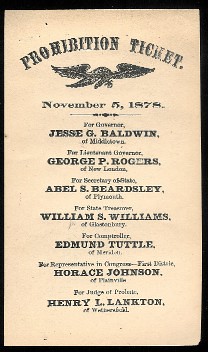
No, the small-l libertarian steak of the local left is dormant. Instead our progressives have shown an unfortunate blue nose tendency, linking the rights issues to the end results. It's a long time problem. Prohibition was considered a "progressive" stance a century ago, in the original Bull Moose Progressive Era.

We saw it a couple years back in the anti-smoking movement, as "public health advocates" couldn't hide their underlying contempt and disgust for tobacco addicts as people. Just say no, they seemed to say, forgetting how ineffective that Reagan-era phrase was, ignoring the cognitive dissonance, ignoring the realities of all evidence about the nature of addiction.

And there's something patronizing in the pro-21 arguments. Bob Welsh writes: "There are many times our youth want to do various things and we as parents need to say, no. This is a time when we as a community need to say no." I know Bob and I know he's sincere. It's not that anyone's being deliberately mean-spirited here. (There's been back and forth finger pointing, but one thing we have fortunately managed to avoid - so far, but there's still a couple weeks left - is the ugly "students shouldn't be allowed to vote" rhetoric we saw in the conservation bond battle two years ago.) But it's just inherent to the argument; we know what's best for you, in spite of your own wishes.

The underlying attitude of many of the "townies" seems to be: We love the Hawkeyes, we love Hancher, but those undergrads are sure annoying. Yet you can't have a major university with nothing but tenured faculty and invisible grad students who never leave the lab. Without our young adults, without those immature and inconvenient freshmen and sophomores and juniors, there is no Iowa City as we know it.

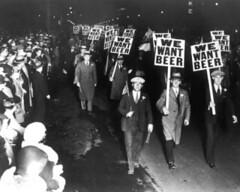
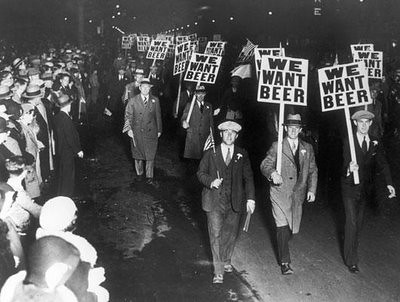
we_want_beerYoung adults want adult fun. And again, that special, adult-plus 21 line defines drinking as "adult fun." I'm not pretending that "adult rights" means 19 year old undergrads will sip on one genteel gin and tonic while earnestly discussing their literature class in a quiet pub. They'll drink two or three too many beers or candy flavored cocktails, dance, and dubiously hook up.

Is it good that the University of Iowa has a regional reputation as a party school? Probably not. Do I wish the students were climbing the rock wall at the new UI rec center on a Friday night instead of puking on the Ped Mall? Absolutely. Am I happy that the only issue that's driven young voters to the polls in this town in my 20 years here is Fight For Your Right To Party? No. (Special note to my undergrad readers: that's a song from back before you were born.)

Like I said, rights fights are uncomfortable sometimes. But that's the real question here: whether young adults have the right to make their own decisions and take responsibility for their own mistakes, like I did, or whether we want to return to the in loco parentis attitudes of the 1950s.

I know from my own difficult experience with alcohol that you can ONLY learn from experience. Only when we drop the Nancy Reagan Just Say No rhetoric and separate the age issue from the abuse issue, and recognize the rights and wishes of young adults, can we Old People gain any credibility with those same young adults to address the very real problems of binge drinking.

On the first day of early voting, I voted Yes on 19. Please join me.

Wednesday, November 07, 2007

Iowa City Takes Progressive Turn

Iowa City Takes Progressive Turn

It's been lost in the excitement of the 21 Bar vote, but last night the Iowa City Council took a definite progressive turn.

Matt Hayek is clearly several steps to the left of the retired Bob Elliott, and progressive Mike Wright is a sea change from the defeated Dee Vanderhoef.

Hayek won virtually by by acclimation, carrying every single precinct. The interesting story is massive undervoting -- that's electionese for skipping a race -- especially in the student-heavy, 21 bar motivated absentee vote. Despite the No On 21/Hayek/Terry Smith campus campaign, Wright came out of the absentees with less than a 200 vote deficit to Smith, and easily made that up at the polls to beat Smith by about 500.

Also interesting, some of Smith and Wright's strongest precincts backed them despite their 21 bar stand. Mike's hot spots were, as expected, progressive precincts 18 and 21, which he represented on neighborhood associations and where he topped 50%. But 21 was one of the half-dozen election day precincts that voted no on 21 bars (the opponents voted early, see below) and 18 was a weak yes precinct. Terry Smith was strongest in east side precincts 6, 16 and 25, the strongest Yes precincts, and also in 14. The 21 issue cut across typical Iowa City lefty/righty lines, and voters made the distinction.

There's really not much bright news for dead-last Dee Vanderhoef. She edged up into the upper 30s in near west side precincts 2 and 9 but that's about it. First Iowa city incumbent to lose in a general election since Dean Thornberry in 1999.

Regenia Bailey (unopposed) is the first District C incumbent re-elected since Randy Larson in 1991. (The history: Larson resigns in 1993, Bruno Pigott wins short term, loses to Thornberry in 1999. Irv Pfab upsets Dean in `99, Regeinia knocks Pfab off in the 103 primary.) And Bikin' Mayor Ross Wilburn tops the 10,000 vote mark to become the top Iowa City vote-getter ever.

As for the bar vote, the 74% No absentee overcame the 57% Yes election day vote. Most of the students voted early but No still carried the day in some of the student and downtown precincts - 3, 5, 11, 19, and 20, plus near-downtown 21 and, surprisingly, my own precinct 10.

The Yes forces were strongest in far from campus places like precinct 8 on the southwest side and 16, 25 and 6 on the east.

Not much to report on the police review board as it won so big everywhere that trends are buried in the landslide. Even working class Tory precinct 12 on the southeast side was at 65%, and the student and lefty areas reported North Korean margins like 87% in precinct 21.

The 15,000+ turnout smashed the old record of 13,000+ from two years ago, which has smashed the ancient record of 11,000 from 1977.

Out in Coralville, Mitch Gross won five of six precincts for a solid 250 vote win. It was a squeaker between incumbents John Weihe and Jean Schnake for the second slot. The dynamic was newcomer vs. incumbents, and it came down to which incumbent had slightly more friends and neighbors. In most areas, the two were within a few votes of each other, butvWeihe won precinct 6 (far north) by 21 votes and that was more than his 11 vote victory margin.

Around the county: Hills topped the turnout at 65% (governor level) to vote No on city water. Tiffin tossed out perpetual mayor Glenn Potter for Royce Phillips, and three newcomers with close to each other vote totals carried North Liberty over James Moody.

Monday, October 29, 2007

No Baloney, 4 Candidates

No Baloney, 4 Candidates


Hayek, Wright, Smith and Vanderhoef in the PATV studios before the forum. Seated in order of finish in the primary -- by design? I thought I had a picture of moderator Gary Sanders but I lied. So here's a picture of Sanders with Bill Richardson.

I'm part of an all-press at the PATV studio in Iowa City for the Gary Sanders No Baloney candidate forum. With us are the four contenders for the two Iowa City at large council seats. Incumbent Dee Vanderhoef is coming off a fourth place primary finish. Progressive newcomer Mike Wright was in second, but may have been hurt by the 2900 on campus satellite votes last week that'll be overwhelmingly NO on the 21 bar ordinance that he and Vanderhoef endorse. Anti-21 groups Bloc21 and Student Health Initiative Taskforce were leafletting for the other two contenders, both newcomers. Matt Hayek was the overwhelming first choice in the primary, with double the support of anyone else. He's gotten endorsements from everyone on the Iowa City political spectrum from conservative ex-mayor Bill Ambrisco and uber-landlord Ed Barker to progressive supervisor Rod Sullivan and, well, crazy blogger John Deeth. The other contender with no on 21 support is third place primary finisher Terry Smith.

Will enough students vote on just the bar ordinance and skip the council races -- an often overheard though -- to give Wright a chance? We shall see in eight days. Will this forum persuade anyone? With thousand of votes in the bank, is there anyone left TO vote?

7:30 and Gary is introducing everyone. If you look up gadfly in the dictionary, you'll see a pic of Gary. He has an actual ring of baloney which will be used as a gavel if there is too much baloney from the candidates. Gary hopes for some hostile questions. "The show will end when I think it's boring."

We run a tape from the League of Women Voters forum which banned "hostile questions." Terry is quoted saying: there are substantial differences between me and Wright. Mike's supporters include "Karen Kubby and Brandon Ross, 'activists.' I'm more moderate. My supporters include Ernie Lehman and Terrence Neuzil." (note: In Iowa City-ese, "activist" is code for "lefty.")

Mike cops to being an "activist." But terry says he never was. Terr, what about Public Power? "I was doing my job, I believe it was right but it was part of my employment." Terry: "There's clear differences between Mike and myself."

Matt calls himself an activist but says it's a loaded, code term. Gary cuts to the chase "do we have left wing vs right wing?" Mike: "I think Terry meant it to mean left wing vs. moderate-conservative."

Gary moves to 21 bars. Notes the Mike Porter (Bloc 21) endorsement of Hayek and Smith. Matt: "I'm not in bed with any group." They got my signs from... someplace, we have 500 of them. We didn't think it was appropriate. We want to be completely independent of the referendum, they took the sign off the car. Terry: Matt filled me in on it and my sign came down too. Matt: I don't represent any bar owners in my law practice... my firm might represent one or two. If there were any perceived conflicts I'd check with city attorney.

Gary asks Matt about the ordinance itself. Matt: you can enforce law through liquor license review. Gary: Why did this have to go to a petition? Dee: 21 has been in from of the council for years. "It is impossible to make charges against the bar itself unless the owner is actually doing the serving." Gary: A few years ago at the last minute the council chickened out on 21, what happened? Dee: Ex-councilor Steven Kanner changed his vote and wanted to negotiate something else -- I don't even remember what -- and broke the deal. Gary: "Kanner screwed up."

Smith: "We have laws on the books." Gary: "Why aren't they working?" Smith: enforcement may be easier downtown, but it'll push parties outside of downtown. Dee disagrees: "There's a lot of house parties right before they go downtown. They choose to go to parties, get well on their way, then they go downtown." And then they go to parties again afterwards. Smith: "I'm opposed because we treat 18 year old students as adults." Smith's 20 year old son is shipping out to Iraq next month, and the 21 ordinance is a denial of adult rights. Drinking downtown is a problem, but I don't think denying rights is a solution.

Wright: "Are their rights being denied because the age is 21?" or because of being denied admission. "Part of the solution is we need to find a non-alcoholic venue for students." Dee: "How can a non-alcoholic venue succeed without the (21 bar) law? They cannot compete, the business plan does not work in competition with an alcohol venue."

Gary: If 19 and 20 year olds in a bar worked, wouldn't other cities copy us? Matt: Big 10 towns are split, Ames is doing it but has other issues. Some problems are unique to cities and geography (where students live). Gary: this is a failure on the part of the city. Dee: "I agree, and we've had a split council every single group. I personally support the ordinance but it's time for the citizens to speak."

Gary: could the city council revisit this? (He gets a fact wrong: an amendment that's gone to the voters can't be considered for two years by the voters.) Gary asks about admitting under-21 with a military ID. Terry: "Since these people are already breaking the law, is it really going to be effective to put one more law on the books?" Mike: Chief of police says he'd rather check out house parties than bars. Dee says it's about "problem residents."

Gary: "Regenia Bailey says old people shouldn't be making laws about young people's fun." He's amused. Smith: base law on majority, and old people don't necessarily support the ordinance. Everybody agrees it's a problem, disagree on solution.

Gary: if students carry this, what will they demand next? Hayek: "elimination of grades? Seriously, this is a difficult issue with good intentions on both sides." Gary attacks faculty senate for not taking a stand. Hayek: "This'll let us put this one subset of the issue to rest," and look at the rest of the problem. Matt: we'd all favor ramping up enforcement. Gary: Is there $ for more cops? Dee: No. Matt: stiffer penalties, some of which is local.

Gary: nobody's had more than a slap on the wrist on this. I came close on the baloney a couple times.

Moving on to TIFs. Dee, do you support the TIF for Mercy? Dee: still looking at details. Terry: this project is a new trend and will come to IC whether it's TIFed or not -- so we don't need to TIF. Mike more or less agrees. Matt: a prudent and cautious answer, I'd use a similar test.

Hieronymous project? Matt: That's a good example of a decent TIF, nothing was happening on that property. Dee: I voted for that, the developers could have done a smaller project w/o a TIF, but could maximize with a TIF. Mike: It had some issues, has been sitting for years. I probably would not have supported. Do we need another downtown luxury hotel? Dee: what's luxury about it? I did not vote to support The Towers, it was supposed to have a hotel. I feared the hotel rooms would be made into condos and the conference space into offices.

Gary: why DO we give property tax breaks to people who can't make the deal with private funding? Dee: Hieronymous will bring spouses of convention goers to shop downtown. Smith: In year one of Hieronymous, the city gains tax $ even with the TIF. This is a mix of housing and not just what the market wants (which is student housing student housing and student housing). He likes the square in the middle too. Where's the downside? Mike: something was going to get built anyway. Whatever happened to venture capitalism? TIFs slow real economic growth. Citys without TIFs invest more in the community. Hayek: TIFs are one of a number of economic tools. So is infrastructure, and arts and culture. Iowa City needs to pursue economic development more aggressively, and we have slow, steady, barely with inflation growth. We need to grow long term. Gary: "I was going to vote for you until you used 'incen' as a verb."

Gary: "Dee, I don't see any of your council colleagues with your signs." Dee; Connie Champion does. Gary: "have you alienated anyone like Steve Kanner?" Dee: not that I know of. Gary: you seem to have less support. Dee: If I hear anything, it's that's you've had 12 years and it's time to turn it over.

Gary: "A number of Midamerican employees running for councils in Eastern Iowa. What's happening here?" Smith: "There's two including myself. That's not uncommon at all. Midamerican has always encouraged employees to be active in the community, and utilities work closely with city govt." Gary: is this the fox guarding the henhouse? Matt: you do what's right and check with city attorney (he sounds OK with it.) Wright: "I won't have too many conflicts from my employment side." As for Terry, "I'd be fine with Terry if we hadn't just put the (Midamerican) franchise agreement out there." Hayek: discusses a conflict case he worked with as an attorney. Wright: "It looks funny, that's the best I can say."

Gary throws it open. Matt asks: "How do we pay for what we've talked about?" He sees three options: "Make cuts in other areas." Dee: "or reallocating staff." Matt "second option is some sort of tax increase, and one option is local option sales tax which has been voted down twice." Smith: or the new emergency dispatch levy. Dee: Almost a shell game unless we explain it carefully. Smith: The city has $50 million general fund but $167 million total.

Gary: why is this stuff so boring? Smith: "until a few years ago I didn't follow local elections so closely." Gary says people understand Iraq or global warming, but not the city budget. Wright: "this is the stuff that affects my daily life." Hayek: with the exception of students, Iowa City has a very engaged local electorate. "We're a society that watches television and increasingly lives on cul de sac and backyard focused homes, increasingly less engaged in the public sphere."

Gary tongue in cheek (?) so should students vote? Hayek: "you can't fault the system when people vote." He gives me a shout out and calls it a night?

Candidates exchange notes about dealing with colds eight days before election.

Gary says the local press is not engaged in the horse race aspects of local politics, and Hayek adds the lack of institutional memory in local press.

Thursday, June 24, 2010

Bar Issue on Iowa City Ballot

It's On Now: Bar Issue Petition Qualifies

After a false start from a petition that fell short (sic) on signatures, opponents of an Iowa City measure to raise the bar admission age to 21 achieved the 2,500 required signatures.

The issue has been a perennial hot button in Iowa City politics, dating back at least to a 2001 student voter drive led by fears of a move from 18 to 21. An abortive city council attempt to go to 21 in 2004 led instead to an incremental change to 19. In 2007, supporters of 21 put the issue on the ballot, but lost in a record turnout led by a near-presidential level of student voting.

p-prohibitionThis time, the council made the first move, passing a 21 ordinance in April, and the 19 side petitioned fot a reversal.

A first petition effort fell short as an artifact of a unique provision of the city's home rule charter: Iowa City requires signatures from "qualified" electors, rather than "eligible" electors. The city clerk has long interpreted "qualified" as strictly as possible: registered to vote at current address. But the 2008 law change allowing for election day voter registration could be interpreted to mean that any citizen of age with an Iowa City address and no felonies could qualify as an elector.

That point is moot now (though it would make an interesting legal fight), as petitioners were able to make up the difference in a two-week drive under poor circumstances (most students were out of town). What matters now is: The city council can either recognize the will of the people, as expressed through the petition AND through the 2007 vote that, in a record turnout city election, rejected the 21 bar ordinance, and reverse its position. Which wasn't very likely and we didn't expect it and the other thing was it can place the issue on the ballot.

1878ProhibitionPartyTicketSMNearly everyone assumes that means the November 2 general election ballot. That'll have a ripple effect throughout the state, as a turnout booster in the state's most Democratic county. Indeed, a few conspiracy minded conservatives have contended that the turnout boost is the driving factor behind the council's moves. They point to the Democratic affiliation of all seven council members.

But that theory doesn't hold water, or beer for that matter. Many Iowa City folks who are business conservative types on local issues stay registered as Democrats, including new council members Terry Dickens and Susan Mims. That turnover, plus increased pressure from the University, are more likely explanations.

The only council member currently active in party politics is Regenia Bailey, one of the county's Roxanne Conlin leaders -- and she was the lone council member to vote no on 21 this spring. Mayor Matt Hayek (who flip-flopped from a "let the voters decide" when both he and 21 bars were on the 2007 ballot to a 2010 position that's the opposite of what the voters actually decided) was active in earlier cycles, but his last major involvement was back on the Chris Dodd campaign.

we-want-beer

No one is really sure how an extra surge of student voting will play in November. All other things being equal, more students voting in a 70% Obama county helps Democrats. On the other hand, many of the new voters in the 2007 election ignored the other offices on the ballot and voted only on the bar issue. On the other other hand, it's easier to ignore unopposed city council members than it is to skip governor and senator. Also worth noting: in 2007 organizers targeted the fraternity-sorority community, which leans a bit Republican compared to other young voters. (It's not undergrads that historically have made Iowa City overwhelmingly Democratic; it's grad students, faculty and staff.)

repealThe bar issue also cuts across traditional party and issue lines. It's a no win for a candidate: you'll either alienate young voters or the self-proclaimed "public health" advocates who pushed 21 hard in 2007. I unfortunately expect the Democratic party to try and dodge the issue. (Though not if I can help it.)

State officials invariably pass the buck, citing the `80s law (Elizabeth Dole's baby) that tied federal highway funding to a drinking age of 21. Yet the issue never percolates up to the federal official level; at least one elected official had privately expressed agreement with me but said, essentially, if I have five minutes of time with the feds I'm not wasting it on the drinking age.

To me it's simple. You're an adult at 18. Adults should have adult rights and responsibilities, and we can't effectively or credibly combat the very real problem of alcohol abuse (I'm 25 years sober myself) until we recognize young people's rights and wishes. So. The drinking age should be the same as the voting age, I oppose anything that moves in the wrong direction, and getting the issue onto the radar needs to be a priority. All that needs to be part of the electoral calculus for Democrats who rely heavily on student help and votes.

Monday, October 07, 2013

Vote Yes To Repeal 21

A Deeth Blog Endorsement

America has a dysfunctional coming of age ritual with alcohol.  It’s tacitly OK to start drinking in your late teens, as long as you don't get caught.  That makes access to alcohol, while not difficult, still a valuable commodity for the coming of age person, emphasizing the link between adulthood and alcohol and encouraging over-use when the “forbidden” (nudge wink) fruit is available.

The college drinking culture cost me a point off my GPA and my first serious relationship.  My own difficult experience with alcohol tells me you can ONLY learn from experience.  That’s why I so adamantly oppose the 21 drinking age and why I voted Yes to repeal the 21 bar ordinance.

21 supporters try to claim that this fight is not about the drinking age. But by refusing to engage on this under-discussed issue, they perpetuate that cultural dysfunction and lose credibility with the same young people they’re patronizingly trying to “protect.”  That makes it harder to address the binge drinking problem they claim to care about.

Nearly every politician I know privately says the 21 drinking age is unworkable.  Some even admit it's unfair to the young adults whose support they eagerly seek in general elections.  But almost none say so in public.  The city-University establishment stance on this is that the end, cracking down on Number One Party School, justifies the means.

For almost all purposes besides alcohol, 18 year olds are considered adults.  In 1971 our nation made a wartime decision, by the overwhelming majority that a constitutional amendment requires, that the age of adulthood was 18.  The drinking age is nowhere near as enshrined.  It’s just legislation.  It can be changed.

Even an assistant city attorney now admits that the 21 ordinance has human rights implications.  But instead of addressing that by recognizing rights, the city wants to redefine rights to get their desired outcome.

Rights fights are uncomfortable sometimes. You have to stick up for unsympathetic characters like Larry Flynt and Illinois Nazis, and Vodka Samm and self-interested bar owners. (Yet self-interest is OK if you want to keep beggars away from your jewelry store.)  Rights aren't less important just because the right in question is less high-minded.

Some people in this town would be happier if the University were nothing but athletes, tenured faculty, invisible grad students who never leave the lab, and the cultural amenities usually seen only in much bigger cities. But without our students, without those immature and inconvenient freshmen and sophomores, there is no Iowa City.

The young adults who drive Iowa City's economy want and deserve adult fun.  I'm not pretending that 19 year olds will go to the bar “just to dance,” or sip on one drink while earnestly discussing their literature class in a quiet pub.  They'll make mistakes.

That's the point.  “We don't want to go back,” says 21 Makes Sense (sic), yet their vision looks back to the we know what's best for you attitudes of the 1950s.  Instead, we should encourage young adults to make their own decisions and take responsibility.

Only when we separate the alcohol abuse issue from the “underage” (sic) drinking issue, and recognize the rights and wishes of young adults, can we Old People be taken seriously on the very real problem of binge drinking.  And voting Yes to repeal 21 Bar is a good first step toward the conversation about the drinking age we need to have.

Also published in Iowa City Press-Citizen,

Iowa City grandfather John Deeth turns 50 this year. He had his last drink on August 25, 1985.

Friday, August 09, 2013

A 21 Side Bar

Lost in the coverage of the Iowa City council's vote to put 21 Bar back on the ballot for a third time: a concurrent vote to reaffirm the council's support of 21, and how that illustrates the dysfunction of Iowa City's electoral system.

Putting the issue on the ballot is kind of a neutral thing. Sure, the council could have seen the error of its ways and repealed 21, but deferring the question to the voters is fair enough. But then immediately re-affirming support for the ordinance? Unanimously?!?

To the untrained eye this contest looks one-sided.  The Yes/19 campaign is inept and invisible, unable to even return reporters' calls. "21 Makes Sense" (sic) has the same all star names it got in 2010 and blanketed the news with its rollout Wedneasday. But this isn't a landslide issue. Don't forget that in 2010, 21 barely survived, just 52-48% (scroll all the way to right).

We're in a town-gown polarized community, so polarized it's unhealthy. There was only one precinct in town that had anything resembling that citywide 52-48 margin - an area that transitioned from student to townie housing. Other than that, the student precincts voted overwhelmingly for 19 and the townies nearly as strongly for 21. The net result: a close race.

Yet the council is governing like it has landslide support on this issue. Which, regardless of what you think of the bar issue itself, is my point.

Set aside the bar admission age issue for a moment. I'd like to; I'm a little too... passionate about it, and I'd really rather someone else, someone with hair and without grandchildren, made the case for my side. For the sake of argument, go to Your Special Place and insert any other bipolar question. Packers-Bears. Mary Anne or Ginger. Cats or dogs. All issues with strong feelings and substantial support on both sides.

To get elected to the city council in Iowa City, you have to win a city-wide election. I'm not going to try to explain the screwy pseudo-district and primary system here; I did so elsewhere recently. Point is, to get a seat you have to win city-wide. And townies flatly refuse to vote for student candidates. In 2011 Raj Patel ran a serious well-funded campaign at age 20 with significant townie support, and he still couldn't get votes east of Governor or west of Sunset.

There's loads of research and history showing that at-large electoral systems have long been used as a tool to dilute minority votes. And Iowa City has not elected a student to the city council since 1979. (No, middle-aged Michelle Payne taking a class doesn't count.) 48 percent of the votes for 19 bar? Zero percent of the votes when the city council reaffirms it.

I'm not asking for a forfeit-style win. A majority, however slim, supported 21 last time. But in a fair system that more accurately reflected voter sentiment, that council vote would have 4-3 or 5-2, not 7-0.

The other communities I've lived in were all college towns in Wisconsin, of similar size to Iowa City. Their city councils were a larger body, a couple dozen members each, elected from wards about the size of our precincts. Each town had two or three students on the council. They didn't run the show, but they had a seat - a VOTING seat - at the table, and from time to time their concerns were addressed or at least heard.

That's the model I'd like to see here.

The city charter is up for review next year. I'm planning to apply for the Charter Review Commission. And without too much bragging, I think I'm highly qualified. What do you think my chances are?

Tuesday, March 23, 2010

21 Bar Council Vote Tonight

21 Bar Council Vote Tonight

As Iowa City's perennial 21 bar fight gears up again, the No on 21 forces have settled on a strategic counter-move: petitioning to lower the admission age to 18. Petition supporter and 2009 city council candidate Dan Tallon said last week that supporters had gathered 3,500 signatures in about 48 hours.

University of Iowa President Sally Mason offered plenty of patronizing opinions in a March 12 Daily Iowan interview. "It is about looking for better alternatives to promote a healthy and safe environment in our community." I've been here longer than Mason, and every "better alternative" (Planet X, anyone?) has flopped. Young adults want adult activities, not the same stuff they were doing in high school.

“I’ve gotten a lot of e-mails and notes from community members about their disappointment and displeasure with student behavior," adds Mason. The Love the Hawkeyes and Hancher, Hate the Students crowd dominates normal city elections, and never acknowledges that the students are the lifeblood of our city rather than a nuisance.

Former City Council member Bob Elliott also came out for 21 bars in his Press-Citizen piece. “Philosophically, I favor identifying a standard legal age for being an adult. If you're old enough to join the military and defend our country in wartime, you should be old enough to have a beer.”

For me, that's where the argument ends. But what should that age be? “You might as well place numbers from 18 through about 23 on a board and throw darts at it,” Elliott says. “I've known some people who've exhibited outstanding maturity by age 16 or 17, and others who just never seemed to acquire that quality of being mature.”

My preference is to make it the constitutional voting age, 18. We can better address young adult alcohol abuse, a very real problem I know too well from my own youth, by first acknowledging young adult rights.

“But there are differences between philosophy and reality,” Elliot says. And that reality is federal law that ties highway funding to the 21 year old drinking age. One (non-county) official says (s)he also agrees with me on the principle, but says if (s)he has five minutes with a federal or state official, the drinking age issue isn't enough of a priority to take the limited time.

But it should be a priority. Here's some modest suggestions.

First, officials need to say, on the record, what they really think of the 21 year old drinking age. If they like it, that fact can be shared with young voters. If they disagree, they should lobby on the issue, the way law enforcement and county attorneys did on the unworkable 2000 foot sex offender law. No one on either side, myself excepted, seems willing to take this on.

Next, and there seems to be positive movement on this facet at least the inevitable vote should be as soon as is fair and practical. This fall's general election would be good, and the city's process should be timed and expedited to help this happen. The city set a precedent in 2000 by putting the infamous “Yes means No” First Avenue initiative on the presidential ballot.

Finally, delay implementation of 21 until after the people have voted. Of course, that already happened two years ago. but since the council seems determined to force a do-over, delayed implementation will make it a little easier to swallow.

Friday, September 27, 2013

Human Rights Hypocrisy

I REALLY wasn't planning on ranting about the 21 Bar vote two days in a row. But sometimes they put the football on the tee for you, and you just have to kick.

Three years after passing the ordinance, the city finally figures out:
Because the 21-ordinance prevents people under the age of 21 from being in a bar after 10 p.m., the ordinance is in violation of the current Human Rights Ordinance. 

“For the 21-ordinance, no one changed or dealt with the Human Rights code,” said Sue Dulek, an assistant city attorney.
But instead of addressing the violation of rights by repealing the ordinance that violates the rights… the city instead wants to redefine rights.
The Iowa City Human Rights Commission proposed an ordinance that will exempt age restrictions based on health, safety, or developmental differences from the Human Rights Ordinance.

"Reflecting the fact, it’s OK to limit age when dealing with alcohol,” said Dulek.

The first consideration for the proposed ordinance will be voted on at the Oct. 1 City Council meeting.

City Councilor Rick Dobyns declined to comment. 
Of COURSE Doctor Do-gooder refused comment. Because this undercuts the 21 side's entire premise of defining the bar age ordinance as a public health issue when it's really a rights issue. It cuts to the core contradiction that 18 year olds are adults for virtually all rights except alcohol. (Condescendingly, the city human rights coordinator likens the 21 bar ordinance to protecting 8 year olds from dangerous equipment.)

I'm not as mad at the University administration-city establishment alliance that's on the 21 side, because their Love The Hawkeyes Hate The Students contempt for young people is plain enough. To them, the ends of cracking down on Number One Party School justify the means of denying people rights.

In rights fights, you have to defend unsympathetic characters. Freedom of speech? Illinois Nazis. So I'm more upset with the "progressives" who are first in line to fight for rights if the issue is, say driving while black or housing discrimination. Just because the victims of a rights violation are Freddie Fratboy and Vodka Samm, and just because Fight For The Right To Party is a less sympathetic right, it doesn't mean the rights violation is unimportant.

Friday, March 12, 2010

Recent Developments on 21 Bars

The 21 Bar Steamroller is Rolling

Today's P-C has lots of scary quotes from unelected city staffers Eleanor Dilkes (city attorney) and Marian Karr (city clerk). The gist seems to be putting any bar issue that gets petitioned on the ballot NOT in this fall's general election, like people anticipated. Instead, they're pointing toward November 2011.

It seems that from the city's perspective, November 2011 is the next "regular" election and November 2010 is a "special" election. But that contradicts the city's precedent in 2000, when they placed the infamous First Avenue 2 initiative (Yes to not build the road and No to build the road) on the presidential ballot. When they want to, they move faster, and they wanted that road bad.

Implementing the 21 ordinance in the summer and pushing a vote back to the fall of 2011 means two whole incoming classes who've never known anything BUT 21. It also means that much more time with that much less business; the council's probably hoping that by the time it finally comes around the bar owners who are active in city politics will go broke.

(Here's something for the council to think about: November 2011 would also put the issue on the same ballot as four council members: 21 supporters Matt Hayek, Mike Wright and Ross Wilburn, and the lone 21 opponent, Regenia Bailey.)

The No on 21 forces have settled early on a counter-move: petitioning to lower the admission age to 18. The Press-Citizen, already beating the 21 drum, openly mocks this: "Are they daft, Machiavellian or just naïve?" I see it as strategic: can the council move to 21 while the 18 petition is on the table? (I see that one going to court...)

UI President Sally Mason offers plenty of patronizing opinions in this DI interview:
  • "It is about looking for better alternatives to promote a healthy and safe environment in our community. And for our students and also for community members." To make you healthier, we'll take away your rights. Sally' I've been here longer than you have and every "better alternative" anyone's ever tried has flopped. Young adults want adult activities, not the same stuff they were doing in high school.

  • "Clearly, a lot of our students are not obeying the law. They are drinking. They are underage (sic), and they are drinking." Define "underage," Sally. Last time I read my 25th Amendment, 18 year olds are ADULTS.

  • "I’ve gotten a lot of e-mails and notes from community members about their disappointment and displeasure with student behavior." Ah, yes, the Love The Hawkeyes and Hancher, Hate The Students crowd.

    Former City Council member Bob Elliott also comes out for 21 in his Press-Citizen piece, changing his mind from his term. He must have remembered my rants, because he acknowledges:
    Philosophically, I favor identifying a standard legal age for being an adult. If you're old enough to join the military and defend our country in wartime, you should be old enough to have a beer.

    Some believe -- perhaps correctly -- that failure to lower the legal age to 18 makes booze a "forbidden fruit," and thus, even more attractive to those younger than 21.

    But there are differences between philosophy and reality.

    However, Bob never says what that age should be, 18 or 21.

    Another office holder, off the record, expresses agreement with me as well, but points the finger back at the state, the feds and the highway money, and says if (s)he has five minutes with a federal or state official, the drinking age issue isn't enough of a priority to take the limited time.

    So what has to happen to get this issue on the radar? Let's look back at the 2000 foot sex offender law. It took years of concerted effort to get the Legislature to acknowledge the unintended consequences (inability to track people and the creation of sex offender ghettoes) and change the law. If they wanted to do the same with the drinking age, they could. They clearly don't want to.

    I'm not expecting to persuade the six Yes votes, so we'll have to settle this in an election. But here's some small asks:

    First: Tell us, in public and on the record, what you really think of the 21 year old drinking age. And if you think it should be lower, lobby on the issue. Put the issue on your annual meeting with the legislators. If the state insists on this unfair and unworkable drinking age law, get them to cough up the extra money it takes to enforce it (I suggest using that all-important, strings-attached federal highway money.)

    Next, word whatever you pass in such a way that it addresses the discrepancy in the age of adulthood. Rick Dobyns' failed 2007 effort referenced "the legal age." I found that offensive, because to me, "legal age" means the age at which you are an adult for everything except alcohol, 18.

    Schedule a vote as soon as is fair and practical (by "fair" I mean "not in the summer".) This fall's general election would be good.

    Finally, delay implementation until after the people have voted. Settle this once and for all and don't make businesses go back and forth.

    I'm willing to accept the public will on this, even if the council is forcing a do-over. But the small steps I suggest will make the pill a little easier to swallow.