Showing posts with label Music. Show all posts

Saturday, March 07, 2009

25 albums that shaped my wood

25 albums that shaped my wood

I got tagged in a Facebook meme that's going around: "25 albums that shaped my wood" (sic). I think my bud changed that from "world" but I'm leaving it. Here's the official rules:

Think of 25 albums that had such a profound effect on you they changed your life or the way you looked at it. They sucked you in and took you over for days, weeks, months, years. These are the albums that you can use to identify time, places, people, emotions. These are the albums that no matter what they were thought of musically shaped your world. When you finish, tag 25 others, including me. Make sure you copy and paste this part so they know the drill. Get the idea now? Good.

Needless to say, in best High Fidelity Guy fashion I went overboard. And like Cusack in High Fidelity, they're filed autobiographically.

These are not necessarily my favorites by these people; just the point where I checked in on that particular artist or music that was significant in my life.

1. Meet the Beatles, the Beatles
2. The Ventures Play Telstar/The Lonely Bull, the Ventures
I'd trade these for Revolver any day, but they were the first two records I ever played as a kid. Meet The Beatles is an American cut and paste version of With The Beatles, improved by adding "I Want To Hold Your Hand," "This Boy," and "I Saw Her Standing There,," but unfortunately they kept "Till There Was You." From the Ventures, I learned surf guitar.

3. Don't Shoot Me I'm Only The Piano Player, Elton John
"Crocodile Rock" was the first single I ever bought, with "Elderberry Wine" on the flip side. And the "God damn it, you're all gonna die" chorus of the mock-country "Texan Love Song" seemed forbidden when I was nine. (In fact, my and my buddies played with a tape recorder and taped it over and over again, giggling all the way when we played it back) It was my friend's older brother's copy; the first album I bought Captain Fantastic and the Brown Dirt Cowboy. (And the cocer art to that had some forbidden fruit too).

4. Fool For The City, Foghat
"Slow Ride" was the first time I learned there was such a thing as a long album version of a song.

5. Freedom Rock, various artists


In honor of all the other K-Tel compilations from those late-night TV ads, where we learned the classics and non-classics one hook line at a time. Well, turn it up, man! (Note that the hippie on the right is reading the Wall Street Journal.)

6. Dog and Butterfly, Heart
Not a masterpiece like Dreamboat Annie, but this tour, in November 1978, was my first rock concert. I had a massive crush on Nancy Wilson for about two years afterward. I may go see them at the Riverside casino this summer, just so I can write about seeing the same band 31 years apart. If I can get an interview.

7. Cheap Trick at Budokan, Cheap Trick.
Screaming Japanese salvation in the summer of disco. I wrote about this at much greater length.

8. The B-52's, the B-52's.
When they were on Saturday Night Live it split my high school into two camps: those of use who thought they were cool and those who thought they were, quote, "gay." They were, of course, both. The first album I ever home-taped. HERE COMES A BIKINI WHALE!

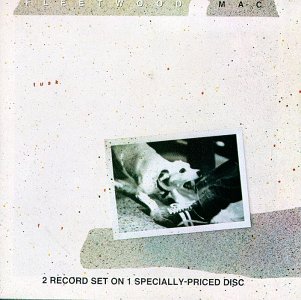
9. Tusk, Fleetwood Mac
A ringer, included for merit rather than influence. More here.

10. Sandinista!, The Clash


The Clash on Tom Snyder during the Bond's Residency, New York, 1981

If this assignment were "One album that shaped my world" this would be it, no question. This record, or these three endless records, opened my eyes to the world around me and started me in a life of politics. Much more here.

11. Trust, Elvis Costello
Not as good as the incredible first four albums, but after the Clash and the B-52's he was my next step out of the mainstream.

12. Rocket To Russia, the Ramones


LOBOTOMY! LOBOTOMY! LOBOTOMY! LOBOTOMY!

13. 1999, Prince
My dorm neighbors unstrung it down the hall and called me faggot. In response I bought everything he made from there up to about the Batman soundtrack. (I'd trade it for Purple Rain, and of course the first single from Around The World In A Day is part of my persona.)

14. Bob Dylan's Greatest Hits Volume 2, Bob Dylan
This 1971 compilation, picked up at a used book store for a quarter along with the first version of the lyrics book, was where I started to learn Dylan beyond the handful of radio hits.

15. Watercolors, Pat Metheny
Released in 1977, autobiographically organized into the fall of 1984. (My favorites are American Garage and As Falls Wichita, So Falls Wichita Falls, but I can't listen to Metheny anymore.)

16. The Unforgettable Fire, U2
I prefer War and Joshua Tree, but "Pride (In The Name of Love)" got my through the awful Reagan re-election. The first time the new music was made for me, by my generation.

17. King of Rock, Run-DMC
Where I learned that rap was more than "just talking." Honorable mention to Public Enemy.

18. Songs From The Big Chair, Tears For Fears
These are the things I can do without: Forever linked with the day I quit drinking.

19. Tim, the Replacements and
20. Flip Your Wig, Husker Du
College radio, 1985-86. I still have the gold record they gave me for "Most Radical DJ" (the bar wasn't too high. I got so tired of "Children of the Sun" by Billy Thorpe that I hid the album behind an 8 foot tall stack of classical and jazz.) "Bastards of Young," from Tim, is still the greatest video ever.


21. Guitar Town, Steve Earle and
22. Rhythm and Romance, Rosanne Cash
And my first radio job after college was... country. And these were the first two country artists that I loved. There was a brief moment when country could have gone this way, but after Garth, there came the deluge of clones in big hats (I'll make an exception for Dwight Yoakam) and tight tops. Who cares if Shania can sing, she looks real purty in them videos.

23. Animals, Pink Floyd
Out of sequence again; 1977 in the real world. Summer of `89, Washington DC, in mine. Much more here.

24. Melissa Etheridge, Melissa Etheridge
After hearing the broken heart on sleeve anguish of her debut I thought, "pity on the guy she wrote those songs about." Uh, well, duh. Once the truth went public, it taught me something about the universality of human emotion.

25. Nevermind, Nirvana
The last time in my life I experienced the new song coming out of the car radio, grabbing me by the ears, dragging me in, making my jaw drop. The last time the new music was made for me, by my generation. I lost track of my ability to keep up with what was new right around the time Kurt died. By that point I was too old for any music to truly shape my world, as much as I love Garbage and Oasis.

Except:

Honorable Mention. A Hangover You Don't Deserve, Bowling for Soup
The nostalgia curve runs about 20 years behind, so that teens can raid their parent's closets and play ironic retro-cool. When I was in high school, we had 50's dances. In the late 80s, they had Freedom Rock.

When my daughter played "1985" for me, the nostalgia curve caught up to me. Like the top of the page says: Too old to be cool, too young not to care.

Thursday, January 08, 2009

Pink Floyd Animals as Punk Rock

Punk Floyd; Reinterpreting 1977's Animals


In the dawning days of punk rock, John Lydon, before he was Rotten, wore a Pink Floyd t-shirt, with I HATE stenciled in above the band name.

“No Elvis, Beatles, or the Rolling Stones in 1977,” the Clash demanded, and Pink Floyd would have been about next on the list. But in that year of punk, Pink Floyd launched an album, now overlooked, that rivaled Rotten in its misanthropy and classified humanity into pigs, dogs and sheep.

Animals gets lost in the classic rock radio version of Pink Floyd history, which encompasses only two and a half albums: Dark Side of the Moon, The Wall, and the shorter tracks on Wish You Were Here. I only twice heard a DJ play the 17 minute “Dogs.” The first was Dr. Johnny Fever, in the timeless turkey-drop episode.


The second was during a summer in Washington, DC, when a radio station had a contest and the winners got to pick six songs to play over the lunch hour, and one smart-ass maximized their own airtime with “Dogs.”

That was in 1989, the summer I first got acquainted with Animals. I was broken-hearted and bitter, and it fit my mood. I remember playing it on a Walkman while I stared at the Vietnam Wall. Sure, the anti-war The Final Cut would have been more appropriate, and so would, well, duh, but Animals was what I had and it worked.

WKRP Tangent

The Pink Floyd scene has been cut from rebroadcasts and DVDs of the classic WKRP in Cincinnati turkey drop episode, one of many victims in the DVD set.

One of the things that made WKRP great was its use of contemporary rock music, the kind of stuff a real Johnny Fever or Venus Flytrap would have played in that era.

(That, and the hot librarian looks of Jan Smithers. They used the old trick: put glasses on the babe to “hide” her attractiveness, to which my response is invariably, “hey, who's the babe in the glasses?” Bailey vs. Jennifer never became a cultural debate like Mary Ann vs. Ginger, because we guys all quickly realized Smithers was far more beautiful than the artificial überblonde Loni Anderson. There, a tangent within a tangent.)

But legal and licensing changes have cut much of that period realism from the show. The rights were not permanent, and to go back and re-buy the rights to use with the new technology is cost-prohibitive. Put simply: the folks making the DVDs don't think they can make enough extra money from the original, uncut shows to pay what Pink Floyd's record company wants to charge.

Usually, they just replaced the recognizable original song with something generic. But often, the music was too important for replacement to work.

The music was inseparable from the humor and dialogue in the “Dogs” scene. Johnny and Carlson are listening to the song, talking specifically about “Dogs” and “Pigs on the Wing,” and looking at the album cover—just like a supercool DJ and his unhip but decent boss, who gave rock and roll a chance despite knowing nothing about it, might have.

Pink Floyd makes the characters more real. Johnny is probably playing “Dogs” as an excuse for a 17 minute nap. The Big Guy wants to be cool and know what's going on, as he spins his head around and around to try to read the record label. But Animals is one more thing that makes him feel like such a fish out of water in his own business that he launches a spectacularly lamebrained publicity scheme just to feel relevant. The Floyd scene helps set up the whole episode.

They could have butchered it, like they did to a whole episode in which Elton John's “Tiny Dancer” was key. The better answer was to drop the whole thing. (Well, the better better answer would have been to pay what they had to.)

But there's no truth to the rumor that “Turkeys” was an unissued outtake from the Animals sessions. Back to our story, already in progress.
In form Animals, a concept album centered around three ten minute-plus tracks, is not punk at all. Floydian bombast and lengthy solos were part of what the punks were rebelling against, and Animals, with several long, moody keyboard sections, lacks punk's conciseness. (Whole Ramones sets were shorter than “Dogs.”)

But Roger Water's vocals and lyrics muster nearly as much rage and nihilism as Johnny Rotten was pouring into that year's classic run of Sex Pistols singles. And wealthy rock aristocrat Waters and street punk Rotten shared common enemies: the political establishment and the crumbling decay of late industrial era UK capitalism.

Industrial decay leaps out from the very cover. The only place where Animals gets full credit in the Pink pantheon is in its artwork. Floyd covers disproportionately became visual icons of rock: the prism and rainbow in the darkness most of all, the flaming handshake, the bricks and grotesque cartoons of The Wall... and the Pig, floating over the smokestacks of London's Battersea Power Station, a brick temple to the coal age just beginning to crumble. (Yes, they really floated it for the picture. And yes, it really did break loose and float into the London Heathrow air traffic lanes.)


Animals starts gently, deceptively, with half of the divided song “Pigs on the Wing” (the full version in the video above is a rarity only included on the... wait for it... eight-track version.) But unlike Wish You Were Here, where the long song is split and the short ones are intact, the halves of “Pigs on the Wing” are but a brief framing device. In 90 seconds the acoustic guitar doubles its tempo and we begin the long march of “Dogs.”

The Dogs are the powers of capitalism, the businessmen with “the club tie, and the firm handshake” like the flaming one on Wish You Were Here.
You have to be trusted by the people that you lie to,
So that when they turn their backs on you,
You'll get the chance to put the knife in.

...and the knife, in the form of Dave Gilmour's guitar, stabs out of the speakers.

You could take about half the verses of “Dogs,” lop out the solos, pick up the pace, and make a decent punk song. It shares its climactic drowning imagery with the Sex Pistols' “Submission.” Which one is this from?
And when you lose control, you'll reap the harvest you have sown.
And as the fear grows, the bad blood slows and turns to stone.
And it's too late to lose the weight you used to need to throw
around.
So have a good drown, as you go down, all alone,
Dragged down by the stone.

And “stone... stone... stone... stone...” echoes on and on over a Rick Wright keyboard interlude, a pause to catch your breath for the next verse.
Deaf, dumb, and blind, you just keep on pretending
That everyone's expendable and no-one has a real friend.
And it seems to you the thing to do would be to isolate the winner
And everything's done under the sun,
And you believe at heart, everyone's a killer.

The verses (no chorus, ever) all have a pattern, starting mostly acoustic and building, louder each line, the ends of lines underscored with guitar for emphasis. Most of the verses are sung by Gilmour. His only co-writing credit on the album is for “Dogs,” mostly for the intense guitar solos that musically dominates the track.

Side one slams to a close with Waters taking over the vocals here and for most of the rest of the album, viciously spitting out the repetitive, percussive last lines:
Who was born in a house full of pain.
Who was trained not to spit in the fan.
Who was told what to do by the man.
Who was broken by trained personnel.
Who was fitted with collar and chain.
Who was given a pat on the back.
Who was breaking away from the pack.
Who was only a stranger at home.
Who was ground down in the end.
Who was found dead on the phone.
Who was dragged down by the stone.

Another reason Animals is underrated is that it's the most specifically British of the classic Floyd era. Two of the “Pigs (Three Different Ones)” are specific, contemporary U.K. political figures.


The Pigs of the first verse are politicians in general, as the track starts with an ascending/descending keyboard theme and a five-note guitar riff. The Pigs are generic in the first verse, mocked in their piety-for-show:
When your hand is on your heart,
You're nearly a good laugh,
Almost a joker,
With your head down in the pig bin,
Saying "Keep on digging."

The second Pig is Margaret Thatcher, already Tory party leader in 1977 but still two years away from Number Ten Downing Street. Sure, there's an implicit misogyny in calling her a “fucked-up old hag,” a misogyny which would surface again on The Wall. But Thatcher-hatred is an individual thing and, as Britain would learn, something she'd earn. Waters would rage against Thatcher, and her disproportionate Falklands War, by name for much of 1983's The Final Cut, his last album with the band.

An American might easily misinterpret the third Pig, in the verse beginning “Hey you white house,” as a reference to the American president's home. But Mary Whitehouse was a British censorship advocate, sort of a U.K. version of Tipper Gore. Knowing this, the verse makes more sense:
You're trying to keep our feelings off the street...
You gotta stem the evil tide,
And keep it all on the inside.

At the last live performance of the 1977 tour, at the end of this song, Waters had a moment of punk rage and spat, Sid Vicious style, on a fan. The “Montreal spitting incident” was a key moment in the genesis of The Wall.


Moving on from the pigsty, the “Sheep” begin to bleat. The Sheep are the masses, the proles, and here Waters deviates from Rotten's world view and adopts a revolutionary punk stance more akin to that other great punk, Joe Strummer of the Clash. After being beaten down and eaten up (in a too-long, vocoderized 23rd Psalm parody where the Lord “converteth me to lamb cutlets”), the Sheep rise up against the Pigs and Dogs:
Bleating and babbling I fell on his neck with a scream.
Wave upon wave of demented avengers
March cheerfully out of obscurity into the dream.

Have you heard the news?
The dogs are dead!
You better stay home
And do as you're told.
Get out of the road if you want to grow old.

And Gilmour celebrates the revolution with a angrily triumphant guitar solo. After about two minutes it fades off into the distance behind the Sheep, and the acoustic guitars return to conclude “Pigs on the Wing.” Chirping birds, deep in the mix, join the menagerie. The vicious Dogs have become man's best friend again, curled up by the hearth:
You know that I care what happens to you,
And I know that you care for me too.
So I don't feel alone,
Or the weight of the stone,
Now that I've found somewhere safe
To bury my bone.
And any fool knows a dog needs a home,
A shelter from pigs on the wing.

And, just like The Wall is in the end torn down, Animals ends on a faint note of hope.

1975's Wish You Were Here, in retrospect, marked the end of one phase of Floyd, saying goodbye symbolically with the epic “Shine On You Crazy Diamond.” Animals is the beginning of the three album Wall arc that saw Waters drifting further away from the rest of the band, culminating in the mostly-hushed autobiography of The Final Cut. When Gilmour took over the Floyd brand in 1987, amidst much litigation, he steered away from the Waters-dominated trilogy, further denying Animals its due.

In 1978, a few weeks after Johnny Rotten asked the Sex Pistols' final audience, "Ever get the feeling you've been cheated?” Monty Python's Eric Idle cracked a Punk Floyd joke in his terrific Beatles parody, All You Need Is Cash (better known as "The Rutles"). The idea of a punk Floyd was as silly as the idea of a punk Paul McCartney.

But you get the idea that Idle hadn't really listened to Animals.


If you liked this switch from the regular format, you may also enjoy:


  • Not That Funny Is It: Fleetwood Mac's Tusk
  • Rockin' in Wisconsin with Cheap Trick
  • Turning Rebellion Into Money: The Story of the Clash (warning: this is an ancient grad school paper with annoying academic language.)
  • Wednesday, June 25, 2008

    Cheap Trick

    Rockin' in Wisconsin with Cheap Trick

    When I was fifteen I wanted to have Robin Zander's hair.

    No one rocked a `70s-cut three piece suit like the lead singer of Cheap Trick. They cut a unique bifurcated figure in Dazed and Confused era rock, best illustrated by the second album cover, Cheap Trick In Color. Zander and bassist Tom Petersson on the front cover, on choppers, with their rock star manes. On the back, the two nerds on children's bicycles, with the subtitle "and in black and white." Drummer Bun E. Carlos looked just like my eighth grade science teacher, and it wasn't because my teacher looked like a rock star. Manic guitarist Rick Nielsen, the songwriting brains of the outfit, had his own mismatched dork fashion sense or lack thereof, complete with Wisconsincentric ephemera like a Point Beer button.
    Cheap Trick In Color was near-perfect, its only flaw being its brevity. It came out maybe ten minutes after the self-titled first album, which confused DJs by labeling its sides "Side A" and "Side 1" and featured the dirty old man classic "Daddy Should Have Stayed In High School." The producers of "Dazed And Confused", a movie that gets the feel of the era right, lost a great opportunity when they failed to make that the theme song for Matthew McConaghay's character. "I'm thirty but I feel like sixteen," Rick says in Robin's voice. Sounds very different at 44.

    The two albums are of a piece to me now, with short `70's running time and now home-burned onto one CD. I bought the vinyl albums together, a year after the fact, the way most of us did when "Surrender" blasted onto Midwestern radios in the summer of `78.

    It wasn't a national hit but in my town it was omnipresent, with its climactic imagery of your parents doing it in the living room to the tune of your Kiss records. And the rest of that third album, Heaven Tonight, was almost as good.


    There were three Midwest bands that hadn't broken out nationally that I remember from the summer of 1978. There were two decent FM rock stations in my home town, and three songs stood out: "Surrender," "Time For Me To Fly," and "Never Been Any Reason."

    (If I bought those records back in 1978, is it really stealing to download them 30 years later?)

    REO Speedwagon made it all the way from Champaign, Illinois, to the top, but only by getting wimpy. Singer Kevin Cronin had this way of making one-syllable words stretch, making up the difference by running other words together, as in their breakout hit "Keep On Loving You": "You played DAY-ud, butcha never fuh-LEY-ud…" Still, they had one of the great album titles of all time, with You Can Tune A Piano But You Can't Tuna Fish, and "Time For Me To Fly" is a real song. Nowadays, they play county fairs with Styx; that bill would have filled a stadium in 1981.

    Head East, from St. Louis, barely made it at all, their career arc being, like their album title, Flat As A Pancake. They fizzled the same way Kansas did, when one of the guys found Jesus. But "Never Been Any Reason" is a lost classic with its dated synth solos and its unintentionally homoerotic duet male lead vocal. If I had a band (the fantasy that never dies) I'd rearrange that and sing it with a gorgeous female vocalist, with a heart of gold and a tough cigarettes and whiskey voice, since "she" has the upper hand in the lyric putting "her" faithless man down:

    "You never give me no answers, you never tell me the truth
    There's never been any reason for me to think about you…"


    As long as we're fantasizing here, she'd have an ur-70's outfit of a fringe top and tight jeans. I'd have that Robin Zander hair, feathered and down to my shoulders, like I eventually grew and lost, and we'd sing "Never Been Any Reason" eyeball to eyeball into one mike, trading lines, duetting on the climactic "save my life I'm going down for the last time." Just singing. Sleeping with band mates is what screwed up Heart. But I'd replace at least one of the synth solos with a guitar.

    How far away was that fantasy from my reality? Do the words "debate camp" mean anything to you?

    So REO made the big time and Head East failed. Neither of them meant as much to me as Cheap Trick, who landed somewhere in between obscurity and true stardom.

    In 1979 they had their next album in the can, ready to go. But first, just for fun, they issued a souvenir of a tour of Japan, just for the Asian market. The rest is history.

    The big-in-Japan cliché at the grand finale of Spinal Tap was born with Cheap Trick At Budokan. It captured their energy better than the first three records had, became an import best seller, then got rush-released in America, in faux-import packaging. For the third time in a row, the cover had studs Robin and Tom on the front, duds Rick and Bun E. on the back.

    Bob Dylan had an At Budokan album that same summer, but Cheap Trick kicked his ass. The Japanese teenage girls screamed in Beatlesque fashion that was passé by 15 years at the introduction, and didn't stop the whole album:

    ALL RIGHT TOKYO!
    ARE YOU READY!?!
    WILL YOU WELCOME
    EPIC RECORDING ARTISTS
    CHEAP!
    TRICK!


    And we begin the ride with the indelible chords of that two chord classic that these guys have had to play to open every damn show for the last thirty years, because no more purposeful introduction is possible:

    Hello there ladies and gentlemen
    Hello there ladies and gents
    Are you ready to rock?
    Are you ready or not?


    It was that introduction and those two chords that prompted this rant. My MP3 player shouted "ALL RIGHT TOKYO!" in my ears and I had to stop in my tracks. Because "Hello There" doesn't work on random play. I had to go to the controls.

    Shuffle: Off.
    Select artist. A… B… C.
    Select Album: At Budokan.
    Play All.

    Four steps to set the Wayback Machine to June 1979.

    Because the live version of "Hello There" has to, HAS TO, segue with that perfect drum roll into "Come On Come On," which captured my adolescent virginal frustration as perfectly as only rock and roll can.

    Two "new" songs on that first side. There used to be these things called records that had two "sides." "Look Out" had been left off an album and the studio version didn't see the light of day until the box set. "Need Your Love" surfaced later in the year on Dream Police, delayed a few months by the surprise hit of Budokan. The live version was memorable for the extended jamming over nine minutes -- this is a three minute power pop band, remember -- and for Robin's monosyllabic intro. "I NEED… YOUR… luuuuuuuv," as the audience screamed. Between the two, there was "Big Eyes," harder than the In Color version, driven by that eight string bass that no one but Tom Petersson seemed to play either before or since.

    The "Ain't That A Shame" arrangement that opened Side Two started with the obligatory drum solo and ended with a shameless rip from John Lennon's oldies album. No one in Japan knew or cared.

    Then, the moment they became stars, as a piano ballad from Cheap Trick In Color got translated into a power pop classic.

    The April `78 Tokyo audience seemed to know just two parts of English: the band member's names and the song titles, so Robin kept the intros simple, slow and articulate for everyone to understand:

    "I want you… to want… ME!"


    That shout was a welcome respite on the radio in the summer of 1979, the summer I got my first kiss at that same debate camp, and the summer of Summer (Donna, that is). It meant three minutes of rock and roll relief on a radio clogged with the one hit wonders of disco, Number Seven on Casey Kasem when the top six were all disco.

    In retrospect, that was some great stuff. The long version of "Good Times" by Chic was one of the foundations of hip-hop. But as a teenager I was too young to catch the irony, too awkward to dance, too far out in the sticks of Wisconsin to comprehend the urban scene. And adolescent males are disproportionately guilty of homophobia, so before "YMCA" was a stadium singalong there was Disco Sucks. I just wanted the power chords. And Rick Nielsen gave them to me.

    The live version of "Surrender," with Robin's anachronistic intro of "it just came out this week" to the then year old song, had a more up-front version of closing couplets that were buried in the studio mix:

    Bun E.'s all right
    Tommy's all right
    Robin's all right
    Rick's all right
    We're all all right
    We're all all right
    We're All All Right
    WE'RE ALL ALL RIGHT
    WE'RE ALL ALL RIGHT
    WE'RE ALL ALL RIGHT
    WE'RE ALL ALL RIGHT!
    WE'RE ALL ALL RIGHT!


    (Strictly speaking, this isn't FROM Budokan. But it's the same arrangement and has the bonus (?) of The Nuge introducing the band.)

    "We're all all right" was a mantra in the summer of `79 for a Midwestern kid who couldn't dance. It didn't hurt that the guitarist looked like more of a dork than I was. Maybe it was crap pop culture, but it was MY culture.

    A quick run through "Hello There," rewritten as "Goodnight Now," then the rock and roll ritual of cheering for the encore of "Clock Strikes Ten" that you know is coming anyway.

    I wore out three -- THREE! -- vinyl copies of that record before transitioning to CDs in the late `80s.


    The Dream Police album got its delayed release that fall, and for about six months Cheap Trick ruled the small part of the planet that was not under disco hegemony. John Lennon himself called the guys up to work on his tragic final album.

    Rick Nielsen had accomplished two things. He'd made it to the big time, and at that same moment he'd burned through the back catalog of songs he'd honed over years on the Midwest club circuit. By the time I saw them in 1981, Tom Petersson was gone and they were touring behind the weak All Shook Up album, with less killer and more filler. Still, it was fun, as only someone's second-ever rock concert can be, and Rick's five neck guitar still sets the standard for excess. (Yes, each neck actually had a different function. There was a twelve-string, a fretless… and, uh, I can't remember the rest. Probably a contact buzz; didn't inhale on my own till college.)

    As it turned out, disco, not power pop, was more in tune with the future. Breaks and beats were what mattered in the `80s. Guitars lost their primacy as the solid foundation of the music and instead became overdubbed solo instruments, placed precisely between the bridge and the final chorus. While Run, D.M.C., and the late great Jam Master Jay had it both ways, scratching Aerosmith and in that unforgettable video literally breaking down the rock/rap wall, Cheap Trick slogged on.

    You could maybe scrap together a decent album out of the highlights of the next few albums and their countless one-off soundtrack throwaways. Just like Kenny Loggins, they were on every soundtrack of the decade, only Cheap Trick provided the filler between the Loggins hits.

    At the end of the `80s they had a Heart-style comeback, complete with the return of Tom Petersson. Slick overproduction, outside writers, and their first Number One. I was happy for my guys when "The Flame" topped the charts, but there wasn't anything really… Cheap Trick about it. They'd already perfected the power ballad a decade earlier, on the first album's "Mandocello," and that had some life to it. "The Flame" could have been Poison or Cinderella or anyone, a universal least common denominator. Plus if you listened too close, it was kind of a creepy stalker song, like "Every Breath You Take" only more pathetic than ominous.

    They followed it with a pointless cover of "Don't Be Cruel," right around the time Chuck D told us "Elvis was a hero to most, but he never meant shit to me." Then they slid back into the Where Are They Now file, switching labels as often as Rick switched guitar necks on that five-neck. Green Day played “Surrender” live, and Billy Corgan and Smashing Pumpkins paid indirect tribute to the era with “1979,” but it didn't help. The `90's were a hodgepodge for Cheap Trick -- A couple different greatest hits disks, the box set, a second self-titled album just to confuse discographers, a Robin Zander solo album (why?), the live sets from the club gigs and the hometown "silver anniversary" gig.

    For the 20th anniversary of Japan, they released an expanded, double CD version of Budokan. It was a dream come true: my favorite album from when I was fifteen was now suddenly twice as long.

    But still, it didn't feel right. I mean, the music was still great, but after a thousand listens it felt wrong without the sequencing, the extra songs shoehorned into the original concert order. It was like the Beatles' Anthology series that had come out a few years earlier: archaeological relics of the era, without the years of intervening memories attached. I like having the long version around, but when I regress to fifteen, I usually go back to the one-disk original.

    And 30 years to the week after the original shows, they went back to Japan, back to Budokan.


    "We're all all right" made a re-appearance in the Cheap Trick song most people know these days, their re-write of Big Star's "In The Street" that became the theme to "That's 70s Show." Having grown up in exactly the same time and place as the show is set, they get a lot of the details right. Though there was never anyone in my high school who looked like Laura Prepon.

    One of Nielsen's new lines in the TV theme sticks with me: "We're still rockin' in Wisconsin."

    Yes, we were.

    Friday, October 19, 2007

    Not That Funny Is It

    Not That Funny Is It

    Reporter: Mr. President, following up on Vladimir Putin for a moment, he said recently that next year, when he has to step down according to the constitution, as the president, he may become prime minister; in effect keeping power and dashing any hopes for a genuine democratic transition there ...

    Bush: I've been planning that myself.


    It's not that funny is it
    When you don't know what it is 
    But you can't get enough of it 
    It's not that funny is it?

    Fleetwood Mac, 1979


    Tusk is the underrated album of all time. It was rejected by the public on its release, in part for the massive price tag on the mammoth double album which hit the market just when a glut of other excessive double albums came out for the 1979 holiday season.

    Even the packaging was massive, sleeves within sleeves that made the thing feel like a slab of marble when you picked it up in the $1.99 cutout bins where it resided until vinyl died in the late `80s. And as the CD era dawned it was truncated by the still-developing technology, and issued with a short version of "Sara" that helped deny the album its proper retrospective reassessment. Judged by the standards of the vinyl era and its 35 to 45 minute, intermission to flip the side expectations, it seemed long. But in the CD era with its 70 to 80 minute average running time, it would have fit right in. And judging from its appearances in random play, its individual pieces hold up in the one song at a time, everyone as their own DJ playing for an audience of one, iPod era.

    It didn't help in 1979 that Lindsey Buckingham insisted on making a single out of that bizarro world title song with its murmured background sounds, that `70s rock star excess marching band in a $50,000 rented empty Dodger Stadium, and those wild incongruous shouts of "Tusk!" What the hell was that? Probably the most avant garde piece of audio ever to hit the top ten. That's right, it was right there on top 40 radio between the Bee Gees and the Knack. Real savage like.

    But mostly people wanted it to be Rumours 2, which it emphatically wasn't. But Lindsey Buckingham was at his quirky coolest on songs like "The Ledge" and "I Know I'm Not Wrong," and mellow and thoughtful on "Walk A Thin Line" and "Save Me A Place." Some of his stuff was barely more than home demos -- the band was falling apart, no wonder with all those drugs and affairs -- and sometimes he just worked alone. Buckingham is the great underrated rock guitarist, largely because his band dealt in pop-rock and not in metal-rock. Any doubts? Listen to the last minute or so of "Go Your Own Way."

    Stevie Nicks was always more interesting when her cosmic tendencies were fused with Buckingham's off kilter but always pop musicality, as on "Sisters Of The Moon" and "Angel." Way better than what she cranked out a couple years later with the California mellow mafia on the solo album "Bella Donna" (except, of course, for the incredible "Edge of Seventeen" and its bootylicious groove). Sure, she got sued for "Sara," but that was just legal harassment. And the overshadowed Christine McVie is at her sweetest, easing us into the marathon listen with "Over and Over" and sending us home with a sweet kiss on "Never Forget."

    Took me forever to find all 20 tracks to download -- if I paid $15.98 for it in 1979, am I really stealing if I download it in the 21st century? -- and one might actually have to buy it somehow. There's a deluxe edition out now that has demos on disk two and the full-length "Sara."

    All my music listening these days is on the media player anyway, a 30 gig Creative Zen that I deliberately got instead of an iPod because 1) I'm quirky and 2) it has an audio recorder so I'm able to rationalize it as a work expense. Back in the college house, in the basement music room, we had a door on its side with a eight foot row of 500 or 600 vinyl albums, that I used to shuffle through as I DJ'd our countless parties. Today, I've got that 600 albums worth of music in my pocket, and the vinyl collection is down to a couple dozen sentimental souvenirs. One of those is that slab of Tusk.

    Friday, February 16, 2007

    Return of tha Rage?

    Return of tha Rage?


    "Killing In The Name," remaining relevant 15 years after the fact. Lyrics NSFW, as if I needed to remind you. I won't do what you tell me...

    Chris Cornell is leaving rock group Audioslave, citing "irresolvable personality conflicts as well as musical differences."


    Never really cared for Audioslave, even though I loved Rage and liked Soundgarden; it was always Zack's amped up political lyrics that drew me to Rage Against The Machine.

    Meanwhile, Rage Against the Machine planned to reunite to perform at this year's Coachella Valley Arts and Music Festival, which runs April 27 through 29. Tom Morello, the lead guitarist of Rage Against the Machine and Audioslave, has said the concert is a one-shot deal.


    Here's hoping they make it work and make it last. We need Rage Against The Machine even more than we did in 1992, 1996, 2000... and I'll forever treasure the look of discomfort on Steve Forbes' face when he had to introduce them on Saturday Night Live.